Games between club players are rarely won. They're lost, usually to one of these four patterns.
Chess games rarely feature genius versus genius. They're contests of "who blunders first," and the blunders aren't random. Forks, pins, skewers, and back-rank threats account for a huge share of lost material and lost games at every level below master. Learn to recognize these four shapes and you stop donating pieces; learn to create them and your opponents start donating instead. Each guide below explains one pattern in plain English, with live boards you can load straight into the move calculator.
One piece attacks two at once
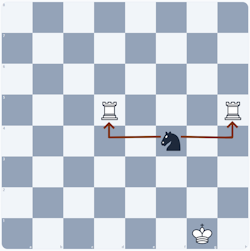
One piece attacks two of yours at the same time; you save one and wave goodbye to the other. Knights are the serial offenders: their weird hop attacks squares your eyes literally skip. The most game-deciding tactic below master level, and the most learnable.
Read the full fork guide →
A piece that cannot safely move
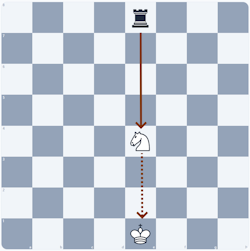
A bishop, rook, or queen stares through one of your pieces at something more valuable behind it, so the front piece just stands there, sometimes all game. Covers absolute vs relative pins, how to break out, and the classic disaster that follows trusting a pin too much.
Read the full pin guide →
A pin running in reverse
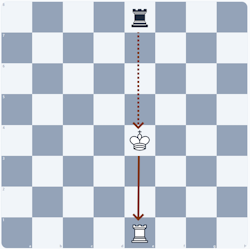
Same geometry as the pin, opposite order: your expensive piece is in front, gets checked or attacked, and has to move. The piece sheltering behind it gets eaten. Quietly decides half of all endgames, especially promotion races.
Read the full skewer guide →
A king trapped behind its own pawns
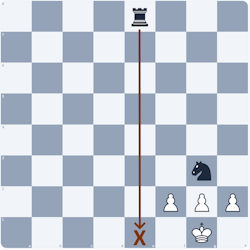
You castled, you're safe, everything's fine. Then a rook strolls onto your first rank and your loyal pawn shield turns out to be a prison wall. Ends more club games than any other mate, and one quiet pawn move makes you immune. Learn the move and when to play it.
Read the full back-rank guide →
ChessCheater surfaces all four of these warnings automatically in any position you load, before move suggestions, so you always know when you are under fire.